On the 20th July 1826 a flotilla of boats, decorated with flags and accompanied by brass bands, sailed from Ferrybridge to Goole to mark the opening of the Knottingley to Goole Canal. On arrival in Goole, at the new docks built by the Aire and Calder Navigation Company, they were greeted by a discharge of cannon fire. This auspicious event heralded a new chapter in the history of this hitherto unremarkable village. Goole was to develop into one of the country’s busiest inland ports with an annual turnover of two million tonnes of cargo.
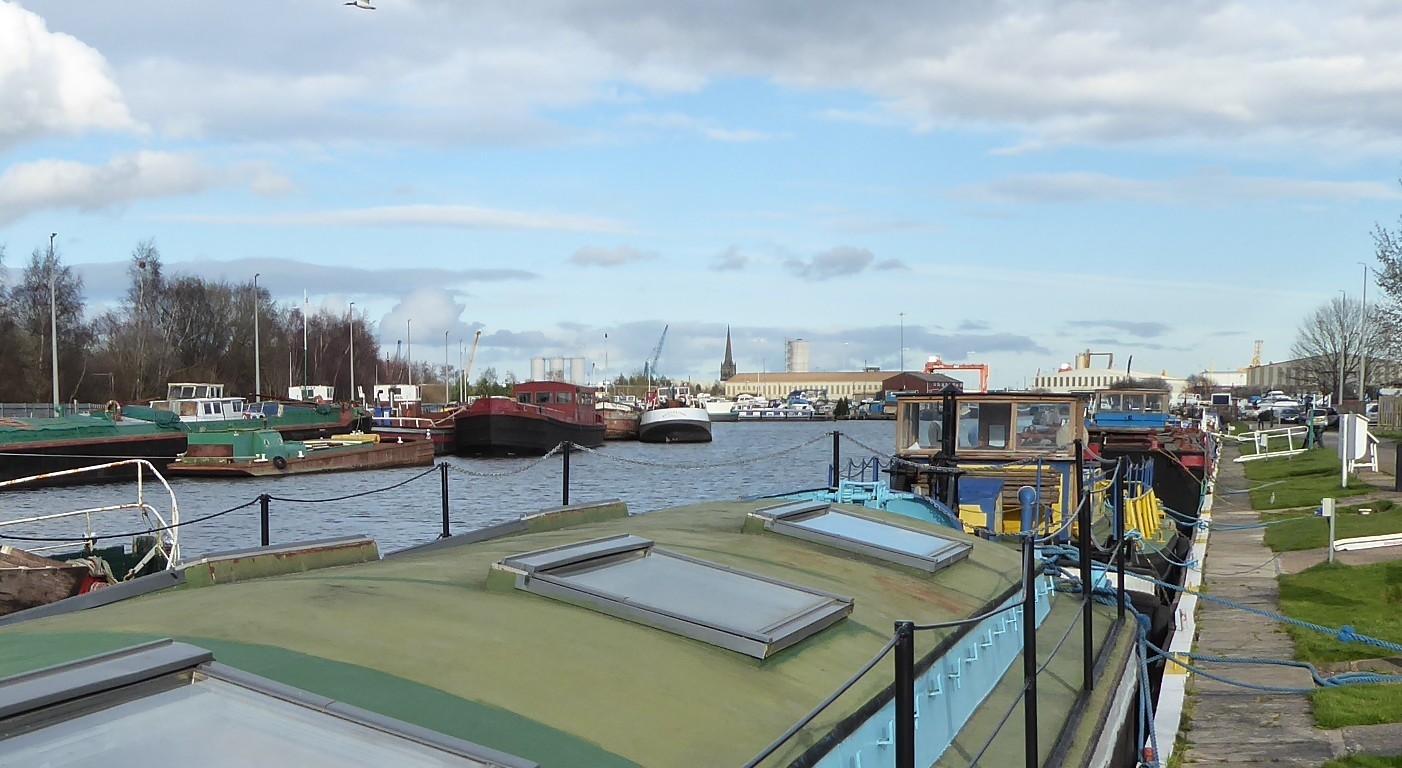
Throughout 2026 Goole will be celebrating its Bio Centenary with a number of events and activities. One of the most significant will take place on Saturday 18th July when a major flotilla of boats will process around Goole Docks to commemorate the town’s 200th anniversary. Goole Museum and Art Gallery will be hosting a special exhibition of the town’s nautical history and there will be a display of art from the Pierhead Painter, Reuben Chappell.
Why not come and spend the day in this little hidden gem of a town known as the “Port in the Green”? Situated in the countryside of East Yorkshire, slightly off the beaten track, Goole has an intriguing mix of the old and new with the town’s industrial heritage, modern day culture and green spaces. The church of St John the Evangelist is worth a visit with its landmark steeple and its rare stained glass window depicting Lieutenant Ernest Conway Lansdale of the Royal Flying Corps. In WW1 he crash landed behind enemy lines having been shot down by the famous German fighter pilot, The Red Baron. A short distance from the town centre is Oakhill Nature Reserve with secluded lakes, ponds and woodland.
Goole grew up on the banks of the River Ouse, fifty miles inland from the North Sea. The place is first mentioned in 1306 under the name Gull Lewth, Lewth meaning a barn. By the C16th the village was known as Goule, a channel or a stream. Much to the villagers’ disgust this was often alluded to as a sewer! In the C17th the Dutch Engineer, Cornelius Vermuyden, diverted the River Don to drain marshland. The new Lower Don, known as the Dutch River, now linked up with the River Ouse. This created a navigable route for barges bringing coal from the South Yorkshire Coalfield. Being sited at the confluence of these two rivers, created scope for the village of Goole to grow and prosper.
In the early C19th the Aire and Calder Navigation Company built the Knottingley to Goole Canal, the docks and a new town to house the dock workers and visiting seamen. The Bank Arms Hotel, now the Lowther Hotel, was the first building constructed in what was now known as New Goole. This hotel was named after Sir Edward Banks, the civil engineer chiefly responsible for most of the construction of the new town. The advent of the railway in 1848 brought further prosperity to the town and provided links with the growing industrial cities of Hull, Sheffield and Leeds.
Today most of the town’s wealth and employment is still centred around the port with it’s eight docks and three miles of quayside. Container ships carrying steel and timber imported from north eastern Europe provide the main cargoes. However, you can still admire the old Tom Pudding Hoist which was used to empty the coal barges and the two prominent water towers known as “Salt” and “Pepper”. Plans are now in hand to create a 300 acre industrial and manufacturing park, Freeport 36, which will provide new employment for around 3,000 people. This expansion, in tandem with the manufacture of glass, large Tesco distribution centre and Siemens Mobility Company constructing tube trains for the London Piccadilly Line, is set to really put Goole on the map of Yorkshire.
Article contributed by Jenny Denton, Yorkshire Blue Badge Guide: https://yorkshiresbestguides.co.uk/project/jenny-denton/